
From the scene to the shop
Accident Towing in Richardson on a Flatbed, Wheels Off the Ground
After a crash on US 75 or the Bush Turnpike, the way your car is moved can protect or worsen the damage, especially on all-wheel-drive and electric models.
(000) 000-0000 — get the car moved here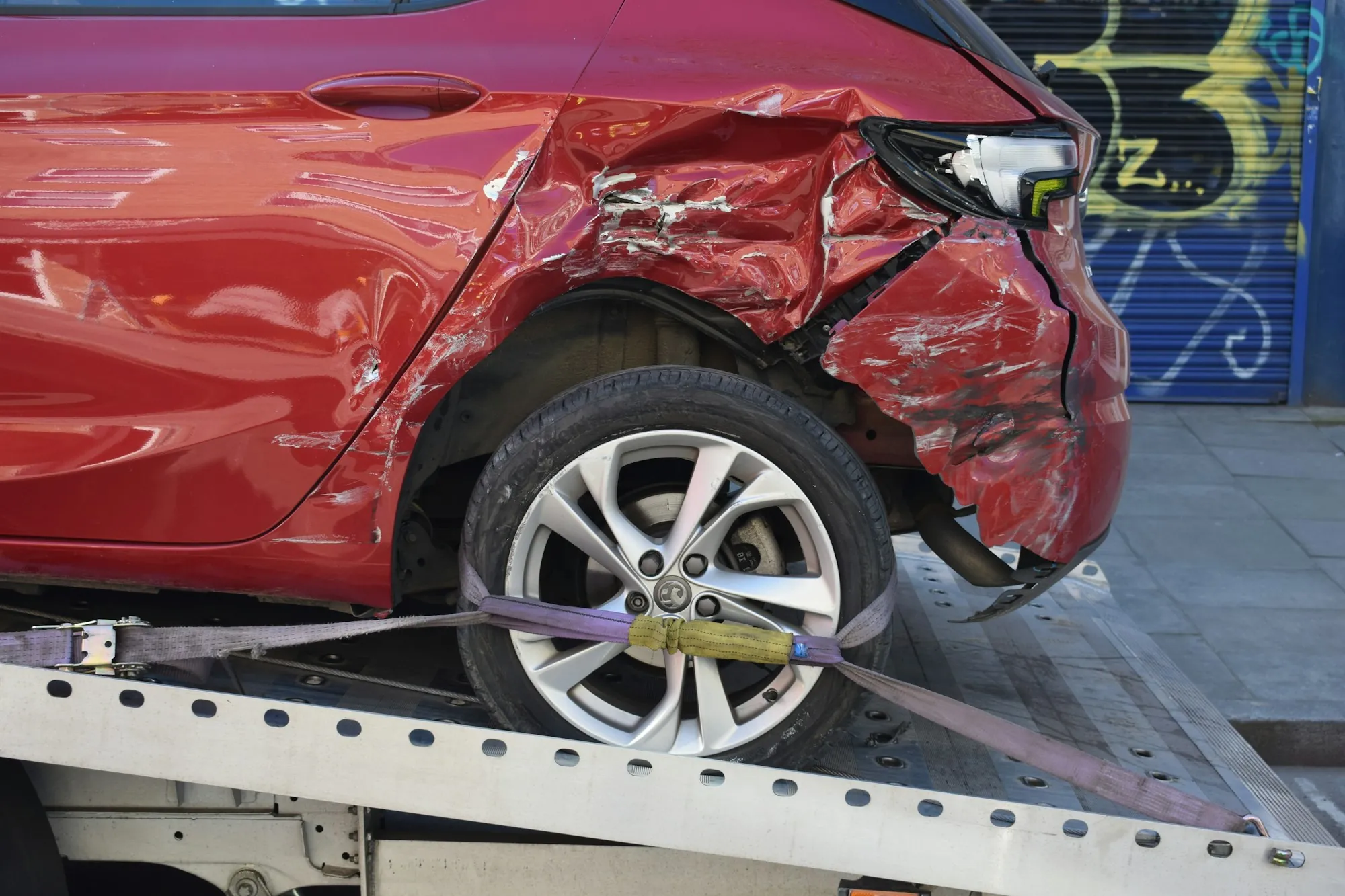
Why Modern Drivetrains Need a Flatbed
Dragging a car on two wheels used to be routine. Today it can hurt the car. All-wheel-drive systems link the front and rear axles, and electric motors can generate current when their wheels spin, so towing with wheels on the pavement risks drivetrain damage. Many cars also have electronic parking brakes and shift-by-wire transmissions that need a specific transport mode before they'll roll. A flatbed carries the whole car, so hidden suspension or structural damage isn't made worse on the way. We arrange that kind of transport from the crash scene or from a storage yard and bring the car straight to our bays.
What We Handle When Arranging the Tow
A tow sounds simple until you're the one on the phone. Here's what we take on.
Flatbed booked for the drivetrain
AWD, EV and hybrid cars get flatbed transport so no wheels turn against a locked or powered axle.
Transport mode and park release
We tell the driver how your model's electronic parking brake and shifter release, so the car isn't forced.
Crash report used to locate the car
If police had the car removed, we use the details on your crash report to find which yard has it.
ID and authorization checklist
We explain the ID, ownership proof and authorization the yard will ask for so the release goes smoothly.
Moving fast on yard charges
Yards bill for every day a car sits, so getting it out quickly keeps that charge from growing.
Who pays for the tow, sorted
We help you check whether your policy or the at-fault driver's carrier covers the tow.
Unload documented in photos
The car is photographed as it comes off the flatbed, giving you and your adjuster a clear record.
Cabin items bagged, systems secured
Personal items are bagged, and a damaged 12-volt or high-voltage system is made safe before the car sits.
Getting the Car From There to Here
- 1
Share the location and drivetrain
Give us the location, or the yard name if the car was already taken. Share the make, model and whether it's electric, hybrid or all-wheel drive. Let us know if it rolls, steers or shows warning lights. That tells us which truck and what handling the car needs.
- 2
Truck and release arranged
We line up a flatbed and, if the car is in a yard, walk you through what the release requires. Your adjuster is told where the car is headed. If an inspector needs to see it, they'll find it at our shop instead of across town. You get an update once the pickup is set.
- 3
Unload, photograph, inspect
The car comes off the flatbed and is photographed on all sides. EVs are checked for battery warnings and parked appropriately. A technician starts the inspection and estimate. You hear what we see as soon as there's something worth reporting.
What Letting Us Arrange the Tow Saves
No drivetrain damage in transit
A flatbed avoids tow-induced damage that can show up later as a differential or motor problem.
Fewer calls for you
Instead of juggling the yard, the tow company and the adjuster, you deal with one shop.
We know the local yards
Cars from crashes around Richardson, Plano and Garland usually land in a handful of nearby lots, and we know how each one works.
Damaged Car That Can't Be Driven?
Tell us where the car is and what powers it, and we'll arrange the right truck. Phone the shop to get things moving.
Line up a flatbed with the shop at (000) 000-0000