
Paint and refinish
Auto Painting & Refinishing in Richardson Matched Shade for Shade
Pearl whites, flake-heavy grays and deep reds are hard to match from a paint code alone. We measure the color on your car, test it, then blend it in.
Ask about your color at (000) 000-0000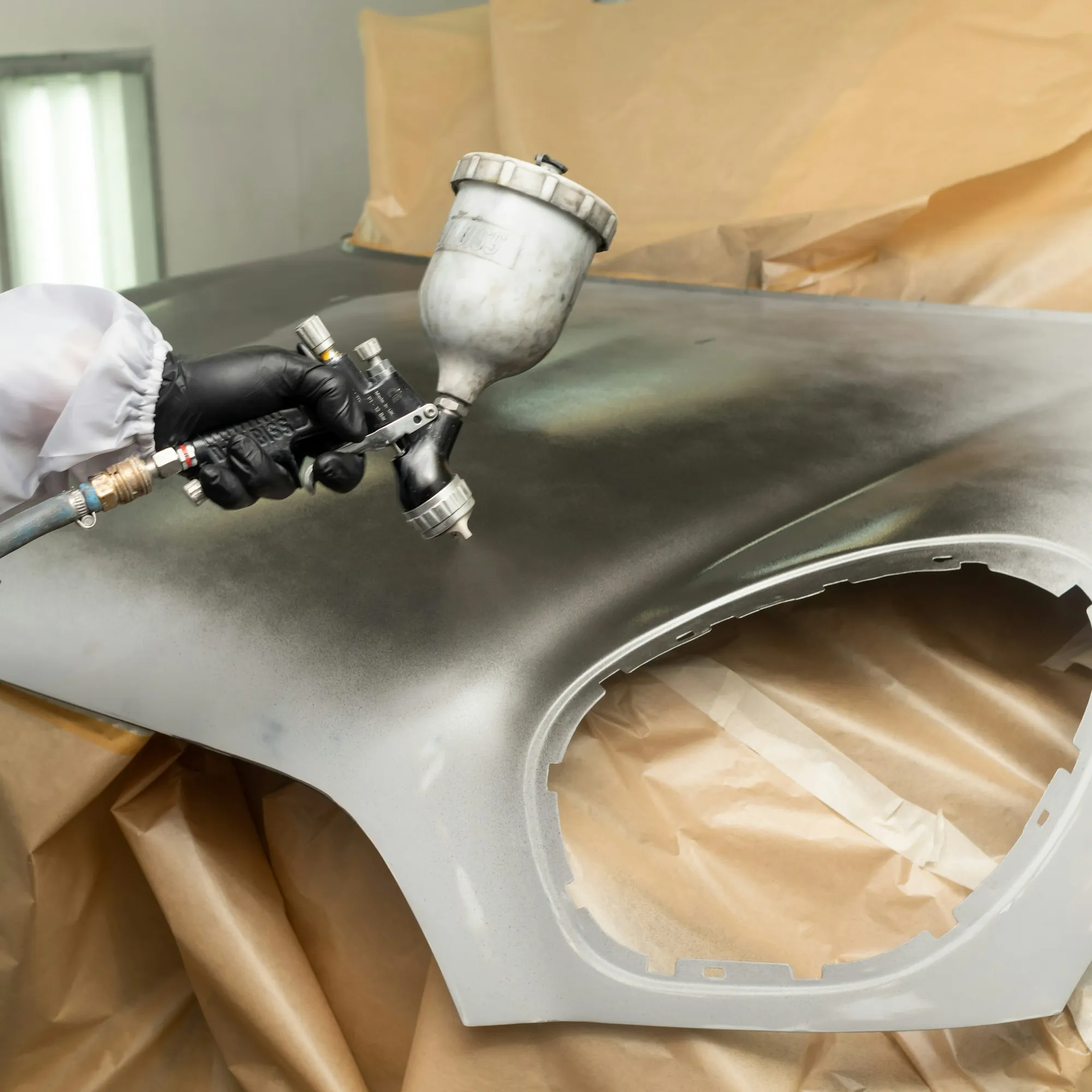
Paint Is a Layered System, Not One Color
Modern automotive finishes are built in layers: a corrosion-resisting e-coat, primer, one or two base coats and a hard clear on top. Many popular colors are tri-coats, with a pearl mid-coat that changes the shade depending on how many passes go on. Even a single paint code can have several factory variants, and long sun exposure shifts the color further. So we read the actual panel with a handheld spectrophotometer, pick the closest formula, spray a test card and compare it to the car outdoors. The color is then blended into the neighboring panels so the eye never finds an edge. Near bumper radar and parking sensors we also check film thickness, because too much paint can interfere with how those sensors see.
The Refinish, From Bare Surface to Gloss
Paint looks simple from across a parking lot. Up close, these steps are what make it match.
Variant lookup for your paint code
We check which factory variants exist for the code so the starting formula matches the shade your car actually left the plant with.
Spectro reading on the adjacent panel
A handheld color camera measures the undamaged panel next to the repair and suggests adjustments to the formula.
Test card sprayed and checked outside
A sample card goes next to the car in sunlight before any color touches the panel.
Surface prep and sealer
Sanding, cleaning and a sealer coat give the color an even base and keep repair marks from showing through.
Pearl mid-coat counted pass by pass
On tri-coat colors, the number of mid-coat passes is matched to the test card so the depth of the pearl lines up.
Downdraft booth and controlled bake
Filtered air flows down and away from the car, and the bake cycle is managed to stay within limits for sensitive electronics and EV batteries.
Film build checked in sensor zones
A gauge confirms total paint thickness on bumpers and grilles where radar or ultrasonic sensors sit behind the paint.
Cut, polish and daylight review
After curing, the clear is polished to match the gloss and texture of the factory finish, then checked outdoors.
How a Color Goes From Formula to Finish
- 1
Read and test the color
We start by looking up the code and its variants, then scan the panel beside the repair. The formula is adjusted and sprayed onto a test card. That card is compared to the car outdoors, and we tweak it again if needed. Only a confirmed match moves on to the booth.
- 2
Mask, seal and spray
The repair area and the panels around it are sanded, cleaned and masked with care around trim, lights and sensors. Sealer goes down first, then base color, then any pearl layer, then clear. Each coat gets the right flash time before the next one. The bake follows, held within safe temperature limits.
- 3
Refine and check
Once cured, the surface is wet-sanded where needed and polished to match the surrounding texture. Paint thickness is measured again in sensor areas. We roll the car outside, since sunlight is far less forgiving than booth lighting. Then it is ready to go home.
What Careful Color Work Gets You
No guessing on tricky colors
Tri-coats and metallics are where mismatches usually happen. Measuring the panel and spraying test cards take the guesswork out.
Paint that cooperates with sensors
Keeping film thickness in range means the radar and parking sensors behind your bumper keep reading accurately.
Texture matters as much as shade
A perfect color with the wrong gloss still looks off. We polish to match the factory surface, not just the hue.
Color on One Panel Looking a Shade Off?
Drivers bring us paint concerns from Spring Valley Road all the way up to Renner Road. Give us a ring and have the color name or code handy if you know it.
(000) 000-0000 puts you in touch with our painter